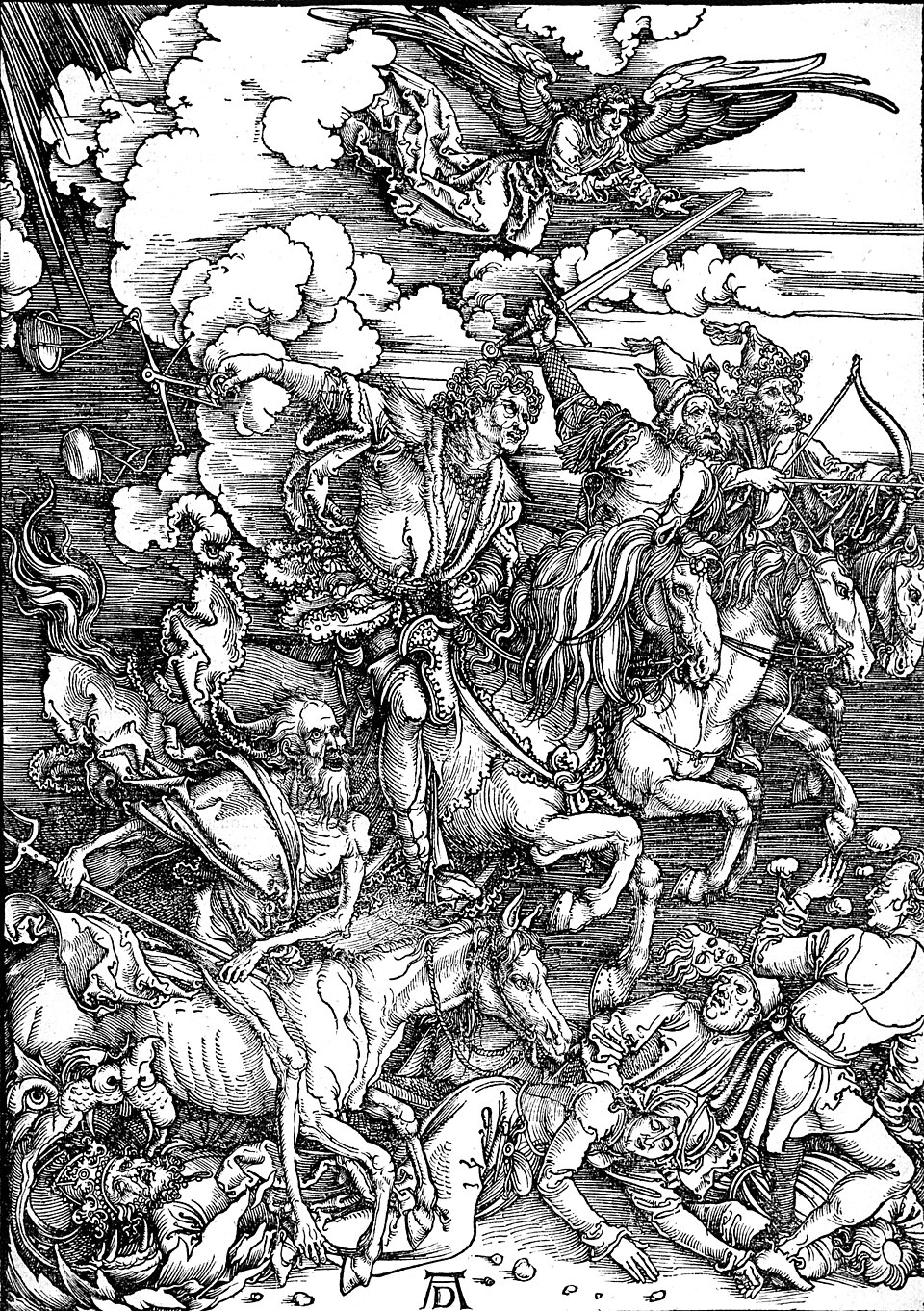
Humanity has long been captivated by the idea of an ultimate end – a grand finale to our existence, whether personal or collective. From ancient myths whispered around campfires to complex theological texts and even modern scientific projections, the concept of a world's end prophecy permeates nearly every culture and era. It's a question that resonates universally, manifesting in different languages and narratives, such as the Dutch query, "Hoe Heet De Profetie Betreffende De Ondergang Van De Wereld?" – which translates to "What is the prophecy concerning the downfall of the world?" This profound inquiry seeks to understand not just if the world will end, but how, and perhaps even when. Let's embark on a deep dive into this enduring fascination, exploring its myriad forms and underlying significance.
The Universal Quest for the "End" Prophecy
The human mind, wired for narrative and meaning, naturally grapples with beginnings and endings. The idea of a world without humanity, or a transformed Earth, evokes both dread and curiosity. This primal interest has spawned countless prophecies, each reflecting the values, fears, and cosmological understanding of its originating society.
Ancient Roots of Apocalyptic Visions
Long before written history, oral traditions carried warnings and predictions of cataclysmic events. These weren't just tales; they were often moral lessons, guides for behavior, or explanations for natural phenomena. Many ancient civilizations shared common themes: a great flood, a cleansing fire, or a cosmic battle between good and evil.
- Norse Mythology: Ragnarök – A cyclical prophecy depicting the twilight of the gods, a massive battle, and the world's immersion in water, followed by its re-emergence and rebirth. It's a grand narrative that answers the Norse equivalent of "Hoe Heet De Profetie Betreffende De Ondergang Van De Wereld" with an epic, cyclical destruction and renewal.
- Mayan Calendar End – Often misinterpreted, the completion of a major cycle in the Mayan Long Count calendar in 2012 was seen by some as a prophecy of the world's end. However, Mayan scholars assert it merely marked the end of one era and the beginning of another, a transition rather than an apocalypse.
- Zoroastrian Eschatology – One of the earliest monotheistic religions, Zoroastrianism foretells a final judgment, a resurrection of the dead, and a purification of the world through fire, leading to a new, perfect existence.
Religious Doomsday Scenarios
Major world religions often feature detailed eschatological frameworks that describe the end times. These prophecies are not merely predictions but are integral to the faith, offering hope, moral guidance, and a sense of ultimate justice or transformation.
- Abrahamic Religions (Christianity, Judaism, Islam): All three share a belief in a final judgment, resurrection, and a new heaven and earth. Christianity's Book of Revelation, for instance, offers vivid imagery of the Antichrist, cosmic battles, and the Second Coming of Christ. Islam speaks of Qiyamah (the Day of Resurrection) and specific signs preceding it, while Judaism has concepts of the Messianic Era and Olam Ha-Ba (the World to Come).
- Hinduism: Kali Yuga – Unlike linear Abrahamic prophecies, Hindu cosmology is cyclical, with the universe undergoing endless cycles of creation, preservation, and dissolution. The current age, Kali Yuga, is believed to be a dark age of conflict and degeneration, culminating in the appearance of Kalki, the tenth avatar of Vishnu, who will restore dharma and initiate a new Golden Age.
Each of these religious traditions provides a distinct answer to the question, "Hoe Heet De Profetie Betreffende De Ondergang Van De Wereld," weaving complex narratives of divine intervention, human agency, and cosmic renewal. For a broader look at how these predictions have evolved, explore Unveiling Doomsday Prophecies: Ancient & Modern Predictions.
Deciphering "Hoe Heet De Profetie Betreffende De Ondergang Van De Wereld": A Global Perspective
The Dutch phrase "Hoe Heet De Profetie Betreffende De Ondergang Van De Wereld" encapsulates a universal human curiosity. It's a testament to the shared human experience of pondering our ultimate fate, regardless of language or culture. This question isn't looking for a single name for a single prophecy; rather, it's asking for the *nature* of such prophecies, the stories we tell ourselves about the end.
The prophecies we've discussed, from Ragnarök to the Kali Yuga, are all distinct answers to this overarching inquiry. They represent humanity's attempt to:
- Find Meaning: Prophecies often provide a framework for understanding suffering, injustice, and the impermanence of life.
- Exert Control: By predicting the end, some believe they can prepare for it, avert it, or secure a favorable outcome.
- Promote Morality: Many end-time scenarios emphasize accountability for one's actions, encouraging righteous living.
- Foster Hope: Paradoxically, many prophecies of destruction also contain the promise of renewal, a better world rising from the ashes of the old.
Understanding the question, "Hoe Heet De Profetie Betreffende De Ondergang Van De Wereld," therefore, means recognizing the diverse tapestry of beliefs, fears, and hopes that underpin humanity's outlook on the future.
Modern Interpretations and Scientific "End-Times"
While ancient and religious prophecies continue to hold sway for many, the modern era has introduced new perspectives on potential world-ending scenarios, often rooted in scientific understanding and global challenges.
From Celestial Events to Human Impact
In the 21st century, the question of the world's end extends beyond divine wrath or mythical battles. Scientists, policymakers, and futurists now explore existential threats that are arguably more tangible and immediate:
- Climate Change: The ongoing alteration of Earth's climate due to human activities poses a severe threat, with scenarios ranging from irreversible environmental damage to mass extinctions and societal collapse.
- Asteroid Impact: The geological record shows that asteroid impacts have caused significant extinction events in Earth's past. While NASA and other agencies track near-Earth objects, a large, undetected asteroid could still pose a global threat.
- Nuclear War: The proliferation of nuclear weapons has kept the threat of a global thermonuclear conflict a chilling possibility throughout the Cold War and beyond.
- Pandemics: Global health crises, as recent history has shown, can severely disrupt societies and economies, raising concerns about future, more lethal pathogens.
- Artificial Intelligence: Some futurists and ethicists warn of the potential for uncontrolled or misaligned artificial intelligence to pose an existential risk to humanity.
- Supervolcanoes: The eruption of a supervolcano could trigger a "volcanic winter," disrupting global climate and agricultural systems for years.
The Psychology Behind Apocalyptic Beliefs
Why do these prophecies, ancient or modern, exert such a powerful hold on the human psyche? The fascination often stems from a complex interplay of psychological needs:
- Sense of Control: In an unpredictable world, prophecies offer a narrative, a sense that there's a plan or a discernible future, even if it's catastrophic.
- Coping Mechanism: For some, believing in an end-time prophecy can be a way to cope with current societal problems or personal struggles, projecting hope onto a future transformation.
- Social Cohesion: Shared apocalyptic beliefs can create strong communities, uniting individuals around a common understanding of the world's trajectory.
- Meaning-Making: Prophecies can imbue life with greater purpose, as individuals strive to fulfill their roles or prepare for the ultimate event.
Separating the sensational from the scientific, and myth from potential reality, is crucial when engaging with these complex topics. For more insights into these distinctions, check out The End of the World Prophecy Explained: Myths, Facts & Beliefs.
Navigating Prophecies: Tips for Critical Engagement
Given the vast array of "end of the world" prophecies, how can one approach them critically and constructively? Here are some practical tips:
- Understand Context: Always consider the historical, cultural, and religious context in which a prophecy emerged. What fears or hopes was it addressing at the time?
- Identify Metaphor vs. Literalism: Many ancient prophecies are rich in symbolic language. Distinguishing between metaphorical meaning and literal prediction is vital for accurate interpretation.
- Evaluate Sources: When encountering new prophecies or interpretations, question the source's credibility, motivations, and evidence. Be wary of sensationalism.
- Recognize the Cycle of Prediction: History is replete with failed end-time predictions. Understanding this pattern can help foster a healthy skepticism towards definitive timelines.
- Focus on Actionable Insights: Instead of dwelling on fear, consider what positive actions or moral lessons can be drawn from such narratives, whether personal growth, environmental stewardship, or social justice.
- Engage with Scientific Consensus: For modern "end-time" scenarios like climate change or asteroid threats, rely on peer-reviewed scientific research and expert consensus rather than speculative claims.
The quest to answer "Hoe Heet De Profetie Betreffende De Ondergang Van De Wereld" is, at its heart, a quest for understanding humanity's place in the cosmos and its potential future. Whether viewed through the lens of ancient scripture or modern science, prophecies of the world's end serve as powerful reminders of our vulnerability, our resilience, and our enduring capacity for hope.
In conclusion, the prophecy of the world's end is not a singular, universally agreed-upon narrative but a diverse collection of beliefs, predictions, and warnings spanning millennia and cultures. From the cyclical destruction and renewal of Norse myths and Hindu Yugas to the linear final judgments of Abrahamic faiths, and the scientific warnings of climate change or asteroid impacts, humanity consistently grapples with its ultimate fate. The question, "Hoe Heet De Profetie Betreffende De Ondergang Van De Wereld," embodies a timeless inquiry into our collective destiny. By exploring these varied prophecies with critical thought and an open mind, we gain not just insights into potential futures, but a deeper understanding of our shared past, our present anxieties, and our persistent human need to make sense of the universe and our role within it.